


EU Treaties & Institutions
The “Migration Crisis” in Ceuta and the EU Pact on Migration and Asylum: Three Lessons for Europe

cepNews
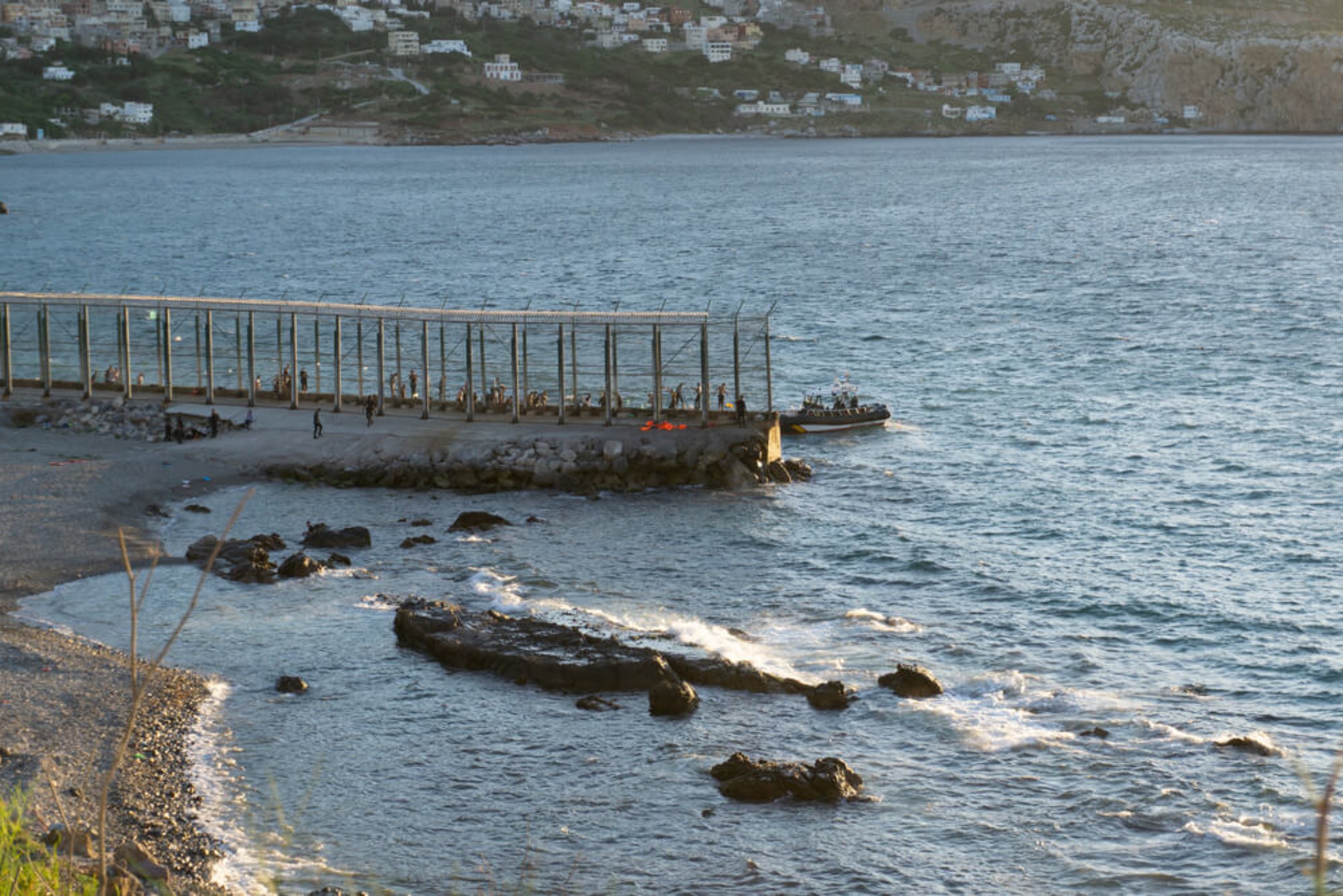
Understandably, this incident has sparked an intense debate across Europe. Although there have been previous attempts at mass crossings from Morocco into the two Spanish exclaves of Ceuta and Melilla, there is no record of such a large-scale influx in such a short period of time. This has raised doubts as to whether the movements were spontaneous. It is indeed rather implausible that 60–70,000 people, including women and children, would suddenly decide to swim to Ceuta simultaneously, without bringing even the most basic supplies to ensure their survival. In fact, investigations by the relevant authorities and testimonies from Moroccan citizens who arrived in Ceuta paint a clear picture. According to Rabat’s intelligence services, fake news spread on Moroccan social media claiming that the borders with the exclave – normally closed and strictly guarded – had opened and that migrants could easily reach Ceuta and then receive authorisation to travel to Spain. The migrants themselves confirmed this when interviewed after their arrival in Ceuta, while Spanish media have reported collusive behaviour on the part of the Moroccan security authorities, who are alleged to have facilitated or even encouraged the flow of migrants towards the border. Furthermore, according to the Spanish newspaper El Español, CCTV footage captured by the Civil Guard reportedly identified Moroccan intelligence agents in plain clothes amongst the groups of migrants. Investigators believe that some of these agents carried out coordination and surveillance activities while Moroccan nationals crossed into Ceuta.
If this were to be confirmed, the incident would no longer constitute a spontaneous attempt at mass migration, but an act of so-called “hybrid warfare” by Morocco against Madrid because it would mean that the migration flows were directed by external forces to put pressure on the Spanish authorities and their reception infrastructure. This is not a new phenomenon: a similar case occurred during the crisis between Belarus and the European Union in the summer of 2021. On that occasion, the Belarusian government instigated a sharp increase in the flow of migrants from countries such as Syria, Iraq, Afghanistan, Libya, Mali, Belarus and Iran heading for the EU’s borders (particularly those of Lithuania, Latvia and Poland). According to some, this was in order to persuade Brussels to recognise the legitimacy of the disputed re-election of Prime Minister Aljaksandr Lukašėnka – seen as a close ally of Vladimir Putin – and to lift the sanctions imposed on Minsk.
Morocco may have employed the same strategy in Ceuta to punish Spanish Prime Minister Pedro Sánchez and his government over the controversial issue of Western Sahara, a former Spanish colony which Rabat considers to be an integral part of its own territory. On 20 July 2026, Sánchez travelled to Algiers to revitalise relations with Algeria, Morocco’s main regional rival and a long-standing supporter of the Polisario Front. This political and military movement has been demanding Western Sahara’s independence from Spanish colonisation, and subsequently from military occupation by Morocco and Mauritania, since 1973. Three days after Mr Sánchez's visit, the Justice Committee of the Spanish Parliament approved a bill to grant Spanish citizenship to Sahrawi people born in Western Sahara during the period of Spanish colonial administration, and their descendants. This measure immediately sparked protests from Rabat as it openly challenges Moroccan sovereignty over Western Sahara. However, other analysts have speculated that the masterminds behind the operation could be forces backed by the United States or Israel. The governments of these two countries enjoy excellent relations with King Muhammad VI of Morocco. In Washington's case, any interference may be linked to Sánchez's unwillingness to comply with President Trump's request to increase Spain's military spending on NATO and to provide military bases in Andalusia for operations in Iran. Meanwhile, Tel Aviv may have sought revenge against one of the European governments that has been most supportive of Palestine and most critical of the measures implemented by Benjamin Netanyahu's government in Gaza and the West Bank over the last three years.
In any event, Spain's problem was not the influx of migrants: the vast majority of those who entered Ceuta returned to Morocco within 48 hours, confirming that they were not genuine asylum seekers. Given how difficult it usually is to get past security checks, it is highly unlikely that anyone seeking international protection would leave the exclave territory so quickly and without resistance. For Sánchez, the real problem came from the reaction of certain European countries, particularly Italy. Prime Minister Meloni immediately blamed the Spanish government for the influx from Morocco, announcing a one-month suspension of the Schengen Agreement for third-country nationals arriving from Spain at Italian ports and airports. The official justification was to “prevent possible repercussions for our nation”, as “uncontrolled illegal immigration poses a real threat to the security of European borders”. As a result of the suspension of the Schengen Agreement, border controls have been reinstated for those arriving in Italy from Spain. At Italian airports and ports, passengers arriving from Spain can no longer use the “fast-track” lanes but have to undergo standard police checks and present a valid identity card or passport for travel abroad. Non-EU citizens, who are the intended targets of the measure, must prove the legality of their stay or visa.
As expected, the Spanish government has protested vehemently against Italy’s decision, pointing out that reaching Ceuta does not allow for free passage to mainland Spain. Anyone in the exclave requires a special permit from the Spanish authorities and is subject to strict checks before being permitted to leave by air or sea. Furthermore, although Ceuta is formally part of Spain, it is expressly excluded from the Schengen Area. It is therefore unclear by what logic the Italian government has decided to suspend rules relating to movement within an area that excludes the territory affected by the influx of migrants. Another aspect of the Meloni government’s suspension of the Schengen Area that is difficult to understand is that it applies only to ports and airports, not land border controls. In other words, someone who has entered Spanish territory illegally could still easily cross Spain and France by land, entering Italy via the Italian-French border without undergoing any checks.
There are valid reasons to suspect that Italy’s suspension of the Schengen Area agreement with Spain is linked to the current domestic political situation in Italy, rather than being about combating illegal migration. In 2027, Italians will vote in parliamentary elections, and the handling of migrants will be a key election issue. The election campaign is already underway, with several right-wing parties, including General Roberto Vannacci’s newcomer Futuro Nazionale, promising to implement even stricter measures against asylum seekers than those introduced by the Meloni government. Polls unanimously indicate that Futuro Nazionale is eroding the support for other right-wing parties, particularly the Lega and Fratelli d’Italia. It therefore seems plausible that, by taking early restrictive action against Madrid and blaming Sánchez for the crisis, Meloni was seeking to pre-empt accusations of laxity and avoid losing further support. Furthermore, Meloni has repeatedly expressed support for Vox, the radical far-right Spanish party led by Santiago Abascal. Like Meloni, Abascal has blamed the Spanish Socialist Prime Minister for the Ceuta affair.
In conclusion, the European Union can learn at least three lessons from the Ceuta affair, none of which bode well for European interests.
- Lesson No. 1: In times of crisis, the actions of Member State governments are influenced far more by domestic political issues and ideological affinities than by the desire to define shared European intervention strategies. While this approach may offer a short-term political and electoral advantage, it endangers the stability of European solidarity in times of crisis. This solidarity has often been invoked in the past, for example by consecutive Italian governments when Rome was under pressure from large numbers of migrants arriving in Lampedusa. Responding to other countries' migration emergencies by primarily closing one's own internal borders is unlikely to encourage other member states to offer assistance should one become oneself the victim of similar mass influxes of asylum seekers in the future.
- Lesson No. 2: Ceuta is the most recent demonstration of how migration flows can be used at any time as instruments of hybrid warfare by public or private actors to influence the actions of Member States. A system for managing migration flows that relies unconditionally on third-country governments to control migrant departures for Europe may be effective while relations with those governments remain peaceful. However, it can easily become a powerful tool for blackmail when political, economic, or strategic conflicts of interest arise. The security of the Union’s external borders cannot be based on such unreliable and short-lived agreements.
- Lesson No. 3 (a corollary to Lesson No. 2): One of the proposed remedies in the wake of the Ceuta crisis was to speed up the construction of return hubs in third countries willing to handle the examination of asylum applications and the return of migrants not entitled to asylum who are heading for Europe. Unlike the centres built by Italy in Albania, which are fully under Italian jurisdiction and yet remain inactive due to legal issues that are far from resolved, these return hubs would be managed by the local authorities of the third countries hosting them. The same objection regarding the control of migrants departing for Europe applies: entrusting the management of the hubs to third-country governments would give them a powerful means with which to blackmail the EU, a “time bomb” that could explode at any moment, perhaps in the middle of an election campaign.
Meanwhile, at the EU Home Affairs Council meeting on 4 August, the interior ministers of the 27 Member States jointly expressed “strong solidarity” with Spain, as well as their appreciation for “the speed and effectiveness of the Spanish authorities' response in managing the situation in Ceuta”. In truth, Ceuta was the first stress test for the new EU Pact on Migration and Asylum, which came into force just a few weeks ago. The Pact was designed to institutionalise a mandatory yet flexible solidarity mechanism to assist countries of first entry facing significant migratory pressure. However, given the discrepancies between the EU's official position and that adopted by individual national governments, which have shown far less solidarity than required, it may be concluded that the Pact still has some way to go to pass the test.