


EU Treaties & Institutions
Sweden Has Voted: A Knife-Edge Election Leaves No Clear Path to Government


cepNews
Coalition Math Still Unresolved
Four years of centre-right government in Sweden are coming to an end after the centre-left opposition secured a narrow parliamentary majority. As of Monday morning, the Social Democrats remain the largest party, receiving 28.1% of the vote and 100 of the Riksdag’s 349 seats. Together, the left leaning block comprising the Social Democrats, Centre Party, Left Party, and Greens secured 176 seats, compared with 173 seats for the rightwing bloc composed of Moderates, Sweden Democrats, Christian Democrats and Liberals. The figures remain preliminary, as some votes, including votes from abroad, will not be counted until Wednesday.
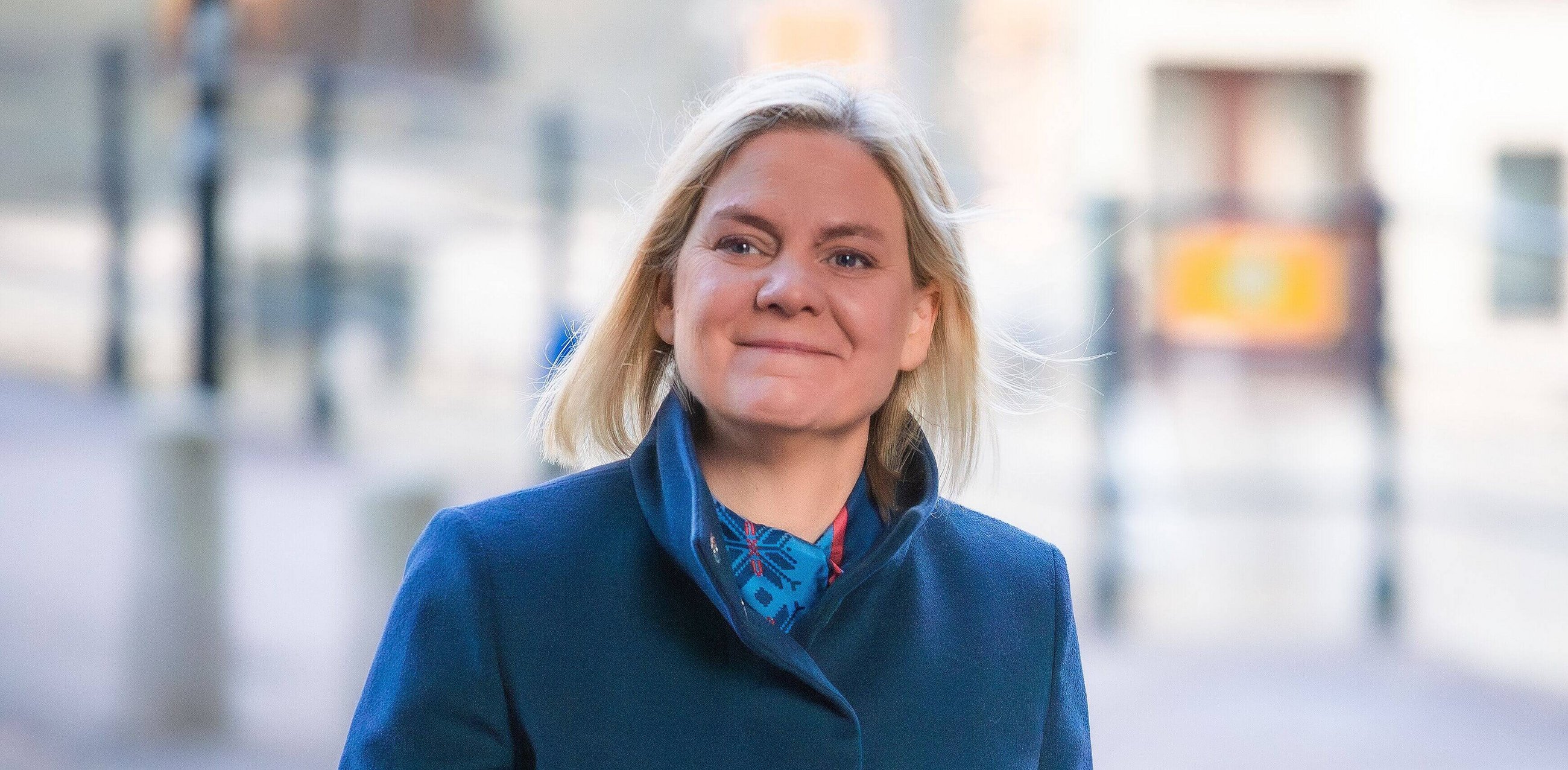
The result puts Social Democratic leader Magdalena Andersson in a position to return as prime minister. Yet the election is more conclusive about the government Sweden has rejected than about the one that will replace it. The central difficulty is the relationship between the Centre Party and the Left Party. Both contributed to the opposition victory, but they differ fundamentally on taxation, private enterprise, welfare provision and European economic policy. The Centre Party has firmly rejected participation in a government that includes the Left Party. They are united, however, in excluding cooperation with the nationalist Sweden Democrats. There is no majority without the participation or support of all four opposition parties.
The most likely outcome is therefore a Social Democratic government, possibly including the Greens and the Centre Party, which negotiates support from either the Left Party or from a constellation of parties from of the right-wing bloc. Such support across the traditional blocs is not a common feature of Swedish politics, which has so far avoided a German-style Grand Coalition. Notably, the Centre Party supports a new inquiry into Swedish euro membership. Sweden remains legally committed to adopting the euro once it fulfils the convergence criteria but has continued to postpone that step.
At the same time, the most pro-European party, the Liberals, surprisingly crossed the four-percent parliamentary threshold, receiving 5.4% and securing 19 seats. This was far from certain during the campaign, with the party polling close to the threshold only days before the election. Their survival was not enough, however, to preserve Kristersson’s parliamentary majority, and the Liberals are now likely to move into opposition together with their centre-right partners. Nevertheless, from a European perspective their continued presence in the Riksdag keeps a clear integration-oriented voice in Swedish politics. The party supports Swedish euro membership, deeper integration of the Single Market and the removal of national vetoes in parts of EU foreign and security policy. It also wants remaining barriers to trade in goods, capital and services within the Single Market to be reduced and rules for companies to be further simplified and harmonised.
Implications for Europe
A Social Democratic-led government is likely to maintain continuity in Sweden’s foreign, security and defence policy. Support for Ukraine, NATO membership, higher defence spending and close Nordic-Baltic cooperation has broad political backing. In 2025, the government and six opposition parties, including the Social Democrats, agreed on a major expansion of defence expenditure, including up to SEK 300 billion in additional borrowing. Migration and criminal policy are also unlikely to change fundamentally, as the Social Democrats have adopted a more restrictive migration policy since the migration crisis of 2015.
At EU level, the Social Democrats advocate deep EU defence cooperation, investment in defence-industrial capacity and greater use of qualified-majority voting on foreign-policy issues such as sanctions. On these issues, the agenda for the incoming government mirrors the outgoing government. However, other areas are likely to be affected, particularly climate and energy. The Social Democrats, Centre Party and Greens all campaigned on stronger environmental ambitions, although they disagree over instruments and costs. The Social Democrats support reducing EU emissions by at least 95 percent by 2040, alongside measures to reduce fossil-fuel dependence and promote green industrial investment.
According to a pre-election analysis by cep Nordic Countries, the outgoing government lowered fuel taxation and reduced the biofuel blending requirement following the closure of the Strait of Hormuz. This made Sweden’s binding European climate commitments more difficult to meet. Under the EU Effort Sharing Regulation, Sweden must reduce emissions from domestic transport, buildings, agriculture, small industry and waste by 50 percent from 2005 levels by 2030. A new government is therefore likely to strengthen transport and industrial climate policy, potentially including renewed incentives for electric vehicles and charging infrastructure. Sweden lost momentum in battery-electric uptake after its purchase bonus was abolished by the outgoing government in November 2022.
Domestically, the change of government is likely to bring somewhat higher taxation and greater welfare ambitions. The welfare objectives will compete with rising defence expenditure and the need to maintain Sweden’s fiscal credibility and international competitiveness.
Although no longer in government, the Liberals’ continued presence in the Riksdag ensures that support for euro membership and deeper Single Market integration remains represented in Swedish politics. With centre-right and right-wing parties currently leading many EU governments, Andersson may find few large Member States willing to champion traditional social-democratic priorities. Her task will be not only to assemble a durable government, but also to give Sweden a clear voice in Europe.