



Artificial Intelligence
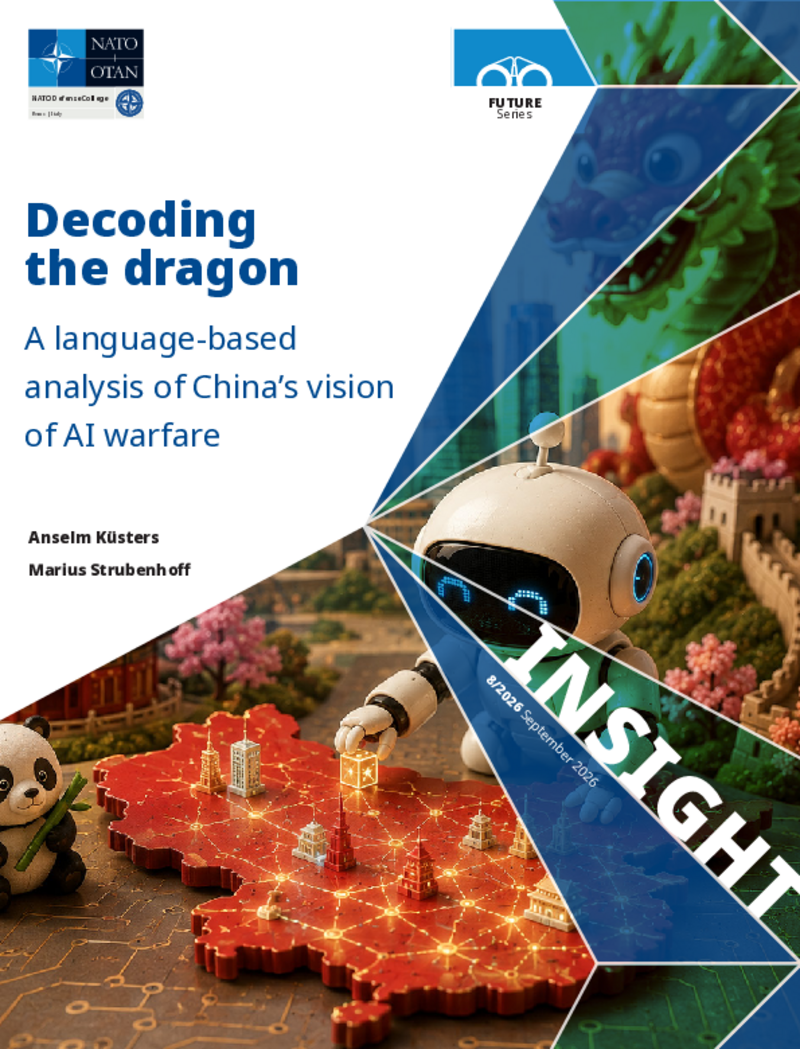
Decoding the Dragon: A Language-Based Analysis of China’s Vision of AI Warfare


cepStudy
For the study, which was commissioned by the NATO Defence College, cep researchers analysed Chinese documents dating from 2000 to 2025. These included legal and strategic texts, Chinese AI research publications, state media coverage, and procurement and defence industry contracts of the People’s Liberation Army. Methodologically, the study combines a classification of AI and military concepts using large language models with a computer-assisted sentiment analysis.
An analysis of Chinese state media reveals a highly positive sentiment towards topics involving military AI. “The growing media prominence of the topic ‘AI and the military’ and the positive tone from 2023 onwards go hand in hand. Taken together, this points to a deliberately optimistic communication strategy,” says cep AI expert Anselm Küsters.
Surveillance is the dominant application of military AI in China, as empirically demonstrated by the LLM-based classification of AI and military concepts. Marius Strubenhoff, foreign and security affairs expert at cep, explains: “Within the framework of the Chinese doctrine of ‘dissipative warfare’, digital surveillance capabilities are not exclusively defensive in nature. They also serve as offensive tools that enable surprise attacks and shorter decision-making cycles within offensive operations.” The doctrine does not seek to cause traditional material attrition to the enemy, but rather to create disorder within their system and stabilise one’s own.
In response, the authors of the study call for a combination of adaptation measures, diplomacy and oversight. Prioritising resilience research to develop AI systems capable of withstanding so-called ‘data poisoning’ and attacks on military decision-making systems is crucial for NATO. On the diplomatic front, the Sino-American understanding reached in November 2024 should be expanded. At that time, the US and China affirmed that the decision to use nuclear weapons must always remain under human control. This statement of principle should be supplemented by agreed definitions specifying which AI applications are permissible within nuclear infrastructure – such as security analyses and anomaly detection – and which are not.
At the bilateral meeting between US President Donald Trump and President Xi Jinping of the People’s Republic of China on 24 September 2026, cooperation on AI was on the agenda. Both sides agreed to inaugurate a joint dialogue on AI, which will meet in November this year for the first time. They also agreed to establish a hotline for AI incidents. The dialogue format will be an important forum to explore further measures to build mutual trust. According to the cep researchers, such commitments must also be extended to other nuclear-weapon states.
“Despite extensive civilian AI research, the Chinese state’s tight control over public discourse suggests that monitoring freely accessible sources alone cannot provide a basis for verifying strategic intentions,” Küsters and Strubenhoff warn. Effective control and agreements therefore require technical measures, such as common standards for documenting AI systems and cryptographic on-chip control mechanisms. The latter refer to security functions that are permanently embedded by the manufacturer into the chip itself, enabling it to independently and securely verify its location and intended use.
Decoding the Dragon: A Language-Based Analysis of China’s Vision of AI Warfare (NATO Defense College)
Download PDF
| Decoding the Dragon: A Language-Based Analysis of China’s Vision of AI Warfare (publ. 09.29.2026) | 4 MB | Download | |
 | |||