


Information Technologies
Hybrid Warfare Reaches Orbit

cepNews
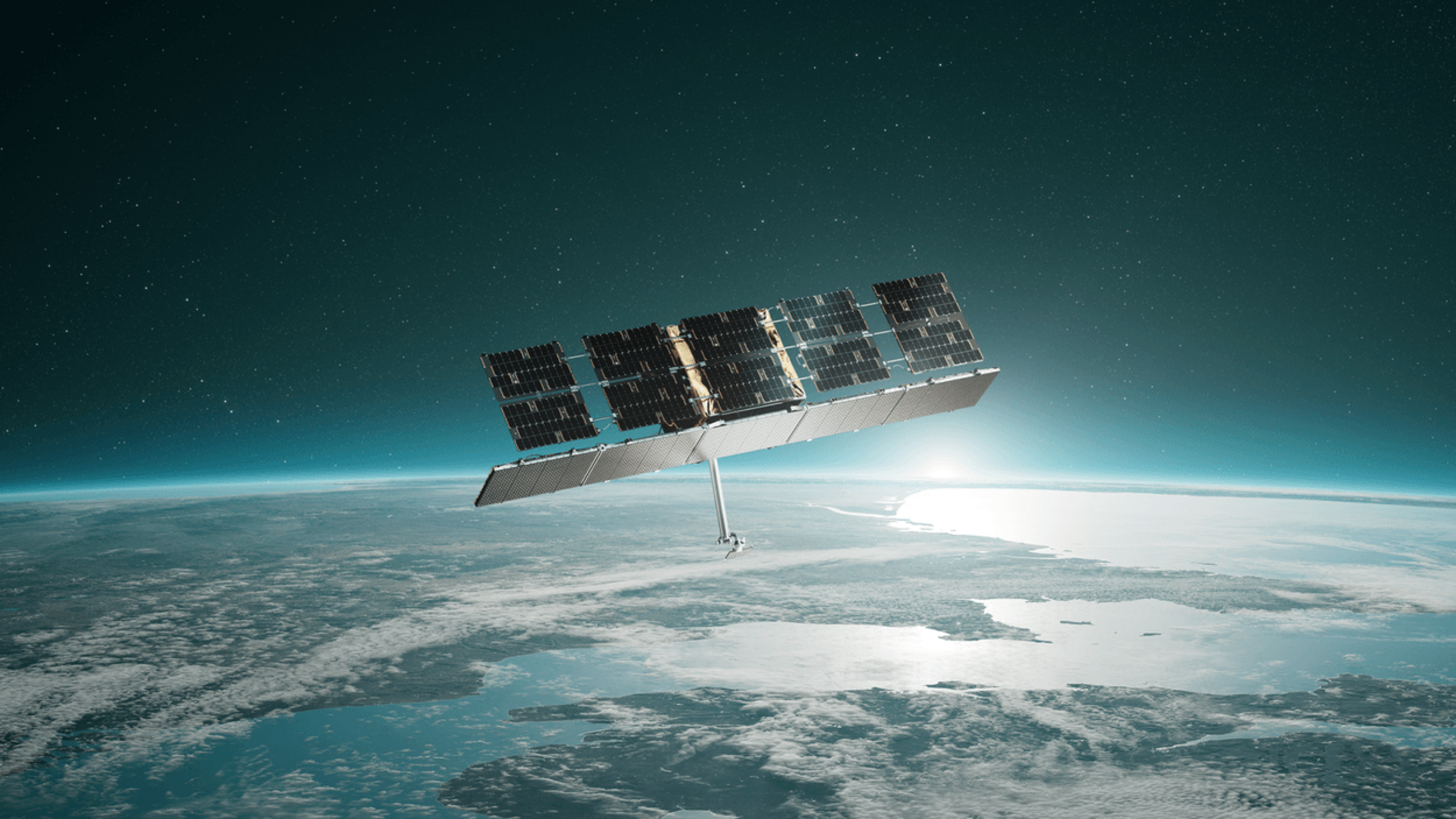
Since 16 October, the Russian military satellite Kosmos 2612 has been flying in close formation with ICEYE-X36, a synthetic aperture radar (SAR) satellite operated by the US subsidiary of the Finnish company ICEYE. Astrophysicist Jonathan McDowell has analysed new orbital data showing that, following a manoeuvre on 16 October, Kosmos 2612 has maintained its position at a distance of no more than five kilometres. This therefore appears to be the first rendezvous between two active satellites in low Earth orbit without the consent of either operator. Satellite expert Marco Langbroek from Delft University of Technology even considered it possible that the two satellites came within a few metres of each other during the night of 18 October, although precise figures are difficult to determine using publicly available data. There has been no public confirmation to date that Kosmos 2612 attempted to interfere with ICEYE-X36. Anselm Küsters, cep expert for digitalisation and space, puts the incident into context.
From the seabed to orbit
Based on the available public data, one can now rule out the possibility of a mere coincidence. Kosmos 2612 was launched in April 2026, together with five other military satellites, aboard a Soyuz rocket from the Plesetsk Cosmodrome. According to CSIS, five satellites from this launch had already entered the orbital plane of ICEYE-X36 by May. ICEYE took evasive action at the time, and the Russian satellites followed suit. Since 30 September, there has been a second series of documented manoeuvres aimed at synchronising the orbital altitude and orbital period of both objects.
This pattern is familiar from the Baltic Sea. In December 2024, the tanker ‘Eagle S’ damaged the Estlink 2 power cable between Finland and Estonia with its dragging anchor. Lawyers and governments subsequently spent months arguing over intent and jurisdiction. The same pattern is now evident in orbit: an action falling just below the threshold of an attack, which, whilst technically explainable, is legally difficult to pin down. A Ukrainian government representative confirmed to Axios that the country is cooperating with ICEYE, but left open the question of whether ICEYE-X36 specifically is supporting Ukraine.
Anselm Küsters, Research Director at cep Nordic Countries, comments: “Following undersea cables and critical digital infrastructure on the ground, hybrid warfare is now reaching space. Russia is testing how far it can go as long as no one can say beyond doubt who did what. The ambiguity is the real instrument here.”
Shahed in orbit: The economics of asymmetry
The war in Ukraine and the Middle East is characterised by the asymmetry between low-cost offensive capabilities and expensive defensive options in air defence. For instance, a Shahed drone costs only a fraction of what it costs to deploy a Patriot system. This asymmetry is now being replicated in orbit. This is because Kosmos 2612 requires neither jammers nor lasers nor projectiles to inflict costs; all it needs is fuel and patience. Every evasive manoeuvre depletes the target satellite’s limited fuel supply, thereby shortening its lifespan. Major General Michael Traut, commander of the Bundeswehr’s Space Command, had already outlined this mechanism following the incidents in May. Speaking to Reuters, he described a scenario in which even large networks such as Elon Musk’s Starlink could be put under pressure without attacking thousands of satellites. The fact that the orbital planes of Kosmos 2611 and Kosmos 2613 are simultaneously approaching another ICEYE satellite, X37, suggests a scalable method.
Anselm Küsters explains: “With the Shahed drones, the defender pays the price in interceptor missiles; in orbit, they pay in fuel and missed images that should have been captured. A low-cost pursuer can tie up a high-value reconnaissance satellite without ever touching it.” Unlike with an interceptor drone, however, there is no simple means of defence in space. An anti-satellite attack would probably be necessary, the resulting debris cloud of which would then endanger all operators.
What the EU Space Act does not regulate
What do the regulations say about such a situation? The European Commission presented its EU Space Act on 25 June 2025. The draft is explicitly not intended to apply to the defence sector. To prevent collisions, it relies on traffic rules and technical requirements regarding the manoeuvrability of space objects. Yet this safety rationale assumes that all operators wish to avoid collisions. Kosmos 2612, however, demonstrates the opposite. As the legislative process is still ongoing, amendments could be incorporated. But Russia would not be bound by the rules.
Under international law, too, the field remains sparsely regulated. Article IX of the Outer Space Treaty merely requires consultations in the event of potential harmful interference; however, there are no agreed minimum distances. Whilst NATO declared in 2021 that attacks in, from, or into space could trigger Article 5, a mere approach presumably does not fulfil any of these criteria. Anselm Küsters sums it up: “The Space Act regulates space debris and traffic rules, but not the scenario where someone deliberately approaches another object. Commercial satellites have effectively become part of the European security architecture. It remains unclear who is responsible for protecting them. This loophole is currently being explored in a very targeted manner.”
Conclusion and outlook
Whether Kosmos 2612 is merely intended to demonstrate a hybrid capability or has further plans might become clear in the coming days. Regardless, a precedent has been set. The grey area familiar to Europe in relation to cables and pipelines now extends into orbit. From an ordoliberal perspective, low Earth orbit is a common good whose use requires reliable rules. Anyone who deliberately circumvents these rules shifts the costs onto all other users. This presents the EU with three tasks: (1) to supplement the Space Act, as part of the ongoing process, with a security dimension – particularly regarding uncoordinated approaches – rather than delegating this entirely to defence policy; (2) to expand space situational awareness capabilities; and (3) to develop a targeted protection doctrine for commercial satellites with security functions.