


New Technologies
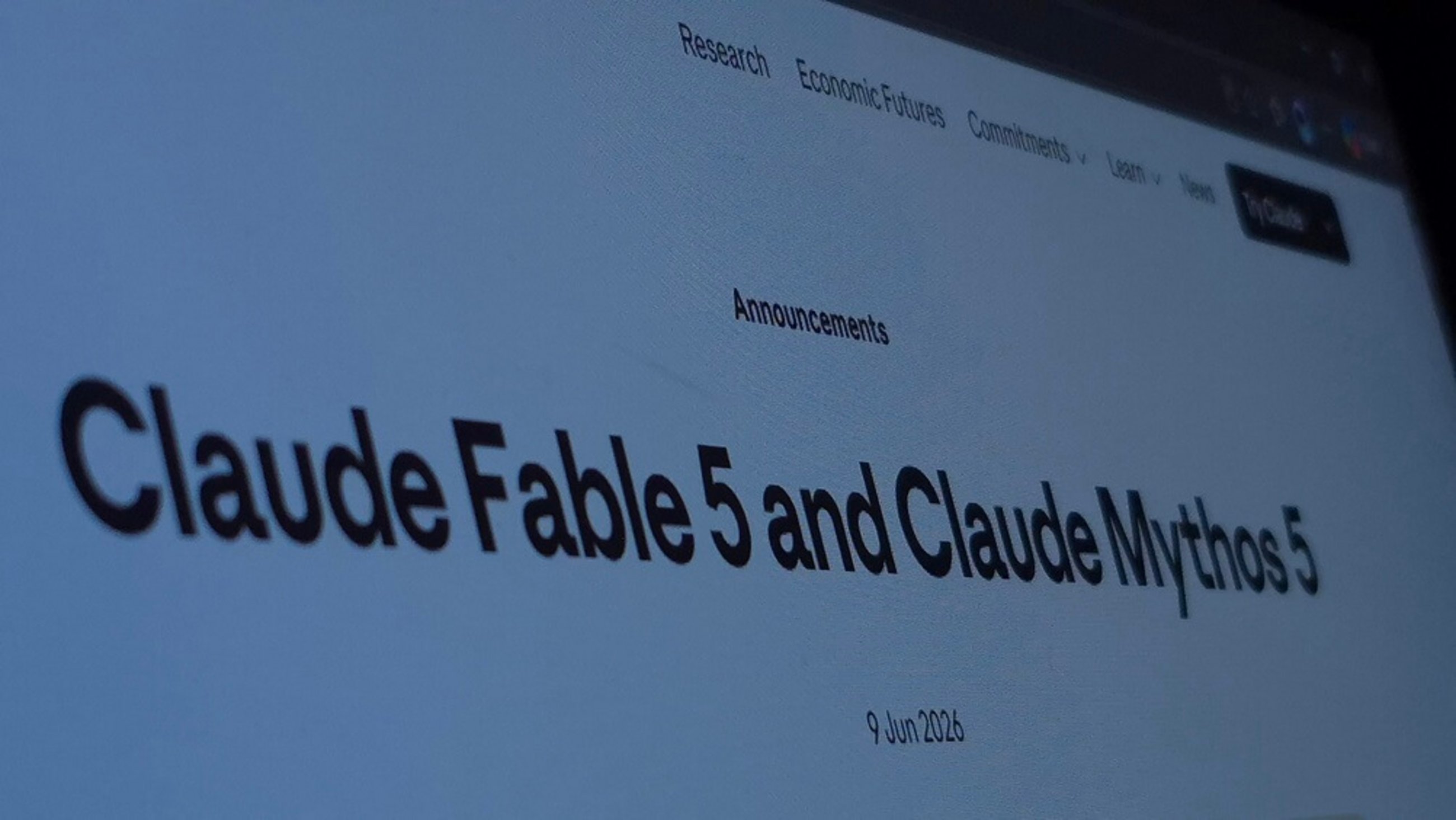
US Access Ban on Anthropic’s Fable/Mythos 5: More of a Geopolitical Signal than a Necessary Security Measure

cepNews
The jailbreak justification is unconvincing
The official justification focuses on security vulnerabilities, in particular on jailbreaks that cannot be fully remedied, as well as on advances in cybersecurity-related capabilities. However, as an analysis by Epoch AI shows, these advances in exploit development and the prioritisation of vulnerabilities do not represent a discontinuous improvement that would obviously justify an emergency global shutdown. Much of this can be attributed to improved prioritisation and increased efficiency – real, but not unprecedented, capabilities.
Anthropic itself openly admitted at the launch of Fable 5 that complete jailbreak resistance is currently unachievable, and instead relies on a defence-in-depth strategy involving monitoring, detection and rapid damage control. All leading providers follow a similar strategy. If a jailbreak described as narrow and non-universal is sufficient to pull the plug on a model used by millions of people, then, by extension, almost all Frontier models would have to be subject to comparable restrictions. This standard has not been applied consistently to date.
Anselm Küsters comments: “The technical justification for banning the Fable 5 is flimsy. Vulnerability to jailbreaking is not a unique feature of this model. If this standard is applied selectively, it is ultimately a political tool.” Recent reports, however, suggest that there may be more to the ban than the cited jailbreak: According to a report by a US media outlet citing an anonymous source, a group with links to the Chinese government is said to have had access to the Mythos 5. This could explain why the strictly regulated Mythos model, and not just the publicly available Fable 5, was affected by the ban. Official confirmation is still pending.
Geopolitical dimensions
The implications arising from the US government’s decision are strategic in nature and extend far beyond this individual case, which could be quickly reversed. By demonstrating that it can restrict global access to a leading AI model overnight, Washington is sending a clear message: Frontier-AI remains subject to US strategic control – vis-à-vis competitors, but also vis-à-vis allies. The fact that the decision comes just a few days after the unveiling of new EU initiatives on technological sovereignty is, to say the least, remarkable. Whether intentional or not, the episode starkly illustrates Europe’s structural dependence on foreign AI infrastructure.
Furthermore, Anthropic has occasionally attracted attention for taking positions that diverged from those of parts of the US national security apparatus, for instance in debates on the military use of advanced AI systems. Was the company simply punished under a pretext? It would be premature to draw conclusions at this stage. However, the question of whether future frontier releases from OpenAI, Google, xAI and others will be subject to similar restrictions is a legitimate one.
The real danger: an accelerated exodus to Chinese models
A key irony of the decision is that it weakens rather than strengthens Western technological influence. If companies and public authorities conclude that access to leading US models could be withdrawn at any time due to opaque political decisions, many will accelerate their migration to open alternatives. These alternatives increasingly originate from China, including models such as Qwen or DeepSeek, which are increasingly keeping pace with Western frontier models in performance benchmarks and are freely available as open weight variants. They may appear more secure because they can be run locally and are thus exempt from sudden export restrictions, but they carry their own risks: non-transparent training processes, censorship mechanisms embedded in the model, potential hidden behaviours, and limited democratic oversight.
Anselm Küsters sums it up: “Anyone who renders Western frontier models unreliable drives users into systems that are even less transparent. The bottom line is a loss of security. Europe therefore needs its own competitive AI capabilities. Strategic resilience requires credible alternatives.”
Conclusion and outlook
The blocking of Fable 5 and Mythos 5 could soon be reversed, not least due to economic considerations and Anthropic’s upcoming IPO. Even if this were to be the case, it constitutes a precedent with far-reaching consequences for global AI governance. For regardless of whether China’s access to Mythos 5 can be confirmed, the episode has unequivocally demonstrated one thing: access to the world’s most powerful AI systems has now become a geopolitical issue. This presents Europe with a two-fold challenge. In the short term, the EU must clarify which regulatory and other mechanisms apply when foreign governments unilaterally decide on access to the latest AI technologies on which European businesses and consumers depend. In the medium term, the development of its own competitive AI capabilities, including open models such as OpenEuroLLM, remains the only robust response to this structural dependency.