


EU Treaties & Institutions
Being in a Bind: Does Europe Stand to Lose in Shenzhen?
Published on 11.19.2026



cepNews
While there are shared objectives, these are more related to prospects for joint interests on a bilateral scale. The most obvious ones are: Beijing and Washington are interested in minimising restrictions on AI development and fostering the digital economy, while also preventing China from intervening in the ongoing crisis in the Strait of Hormuz. Meanwhile, Moscow and Beijing intend to maintain economic relations that allow Russia to sell products to China which are no longer being purchased elsewhere due to sanctions related to the invasion of Ukraine. Additionally, Moscow and Washington aim to legitimise their role in setting the agenda for Ukraine peace negotiations, marginalising both the Ukrainian government and Europe as a whole.
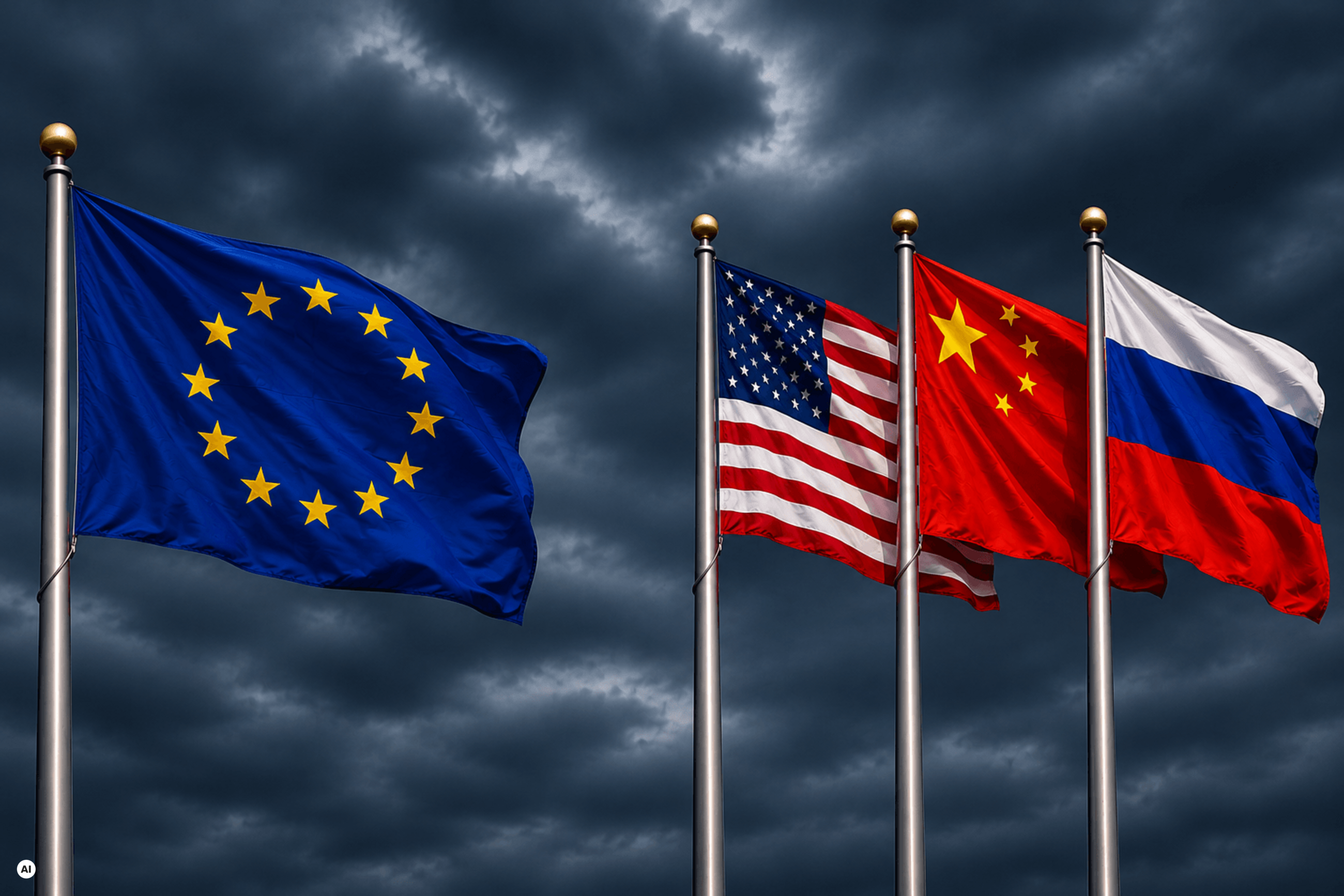
While it is currently impossible to predict the specific outcomes of the trilateral summit in Shenzhen, one thing is certain: the three Presidents recognise each other's exclusive right to address the key issues on the global agenda. This raises the danger that the voices of those not present at the summit will be weakened. Where does this leave Europe?
There are topics that the United States, China, and Russia should talk about. Nuclear proliferation stands out as an issue that concerns the three main nuclear powers more than any other nations. If this topic stands at the centre of discussions in Shenzhen as envisioned by the Trump Administration, this would be a welcome development. If nuclear diplomacy was not important enough to begin with, the rise of artificial intelligence and its potential role in nuclear command, control, and communications raises new serious questions. The best-case scenario for Shenzhen would be talks that build on the Biden-Xi agreement on human control over nuclear weapons dating from November 2024.
Going beyond that, the greatest danger for Europe is that other topics (most importantly, Ukraine) become part of a new dynamic between the three sides. Europe should not just wait for its turn to speak but seek to counterbalance this new trend by various means, including by closer coordination with nations beyond those present at the trilateral meeting.
The fact that Europe is being sidelined in Shenzhen highlights a more general conundrum. Regardless of how Europe decides to position itself vis-à-vis the three other actors, there would be direct punishment by at least one other power. To give an example: Positioning closer to China could prompt the US to make concessions to Russia in order to change the strategic equilibrium of power. There is a real danger that Europe can only lose in this four-way game. To break out of this dynamic, improving its ties with players beyond this trio is the easiest way to affect the global strategic equilibrium in Europe’s favour.
In the meantime, Brussels should equip itself with the appropriate tools to be able to step in with authority when the opportunity arises. The recent decision to appoint a '5+2' European delegation for the Ukraine negotiations — comprising representatives from France, Germany, Italy, Poland and the United Kingdom, as well as the counterparts of the presidents of the European Commission and the Council of the EU — might seem like a decision that deprives Europe of a single, authoritative voice. On the other hand, heterogenous European views on security cannot easily be aggregated and represented by a single voice. Any decisions or commitments by European negotiators will have to be supported by all of Europe. A larger negotiation team may actually be a virtue that facilitates this. Moreover, the negotiations concern several areas that the EU cannot address on its own, including relations between NATO and Russia and commitments for a peacekeeping mission in Ukraine after the war.
On 19 November in Shenzhen, three people will sit at the table; at the next meeting to find an end to the war in Ukraine, seven Europeans will be present: quite a difference – which gives hint to the fact that Europe’s political realities don’t fit neatly with the idea of diplomacy conducted by a few selected great powers.